

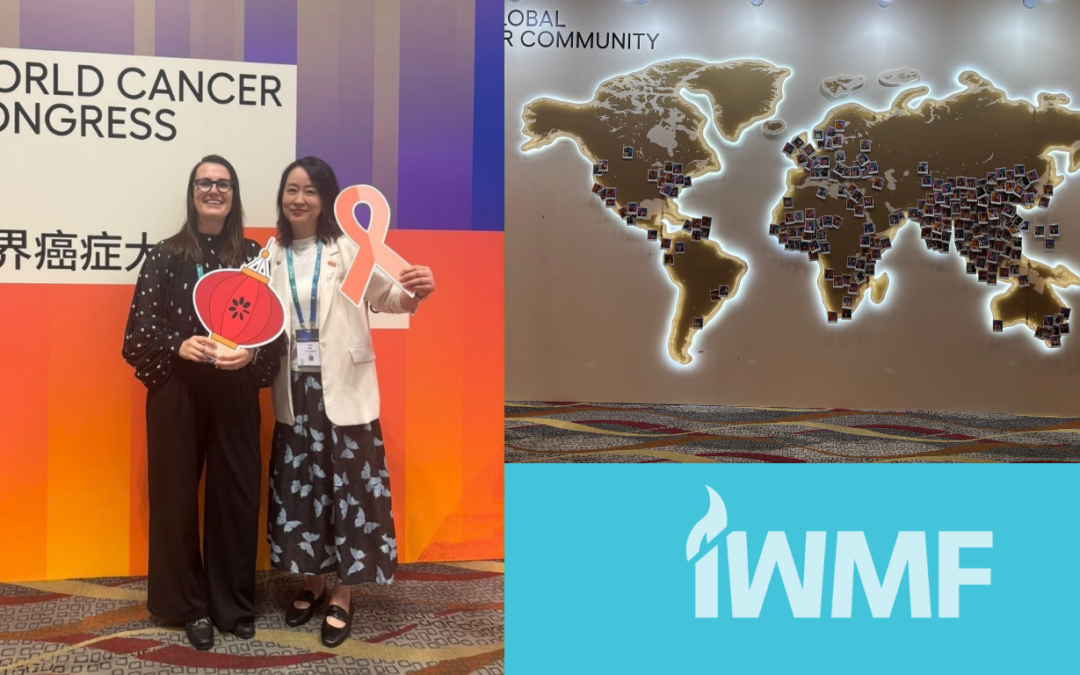
From Patient Priorities to Research Progress
At this year’s World Cancer Congress in Hong Kong, IWMF’s Beth Hill connects patient priorities, research funding, and global partnerships to advance progress toward a future without WM.
Wan Chai, Hong Kong
The International Waldenstrom Macroglobulinemia Foundation (IWMF) brought the voice of the WM community to the international stage at the World Cancer Congress in Hong Kong, September 24–26, 2026.
Beth Hill, IWMF Vice President of Strategic Initiatives, presented Patient-Centered Progress: How IWMF Research Partnerships Are Shaping the Future of WM as part of a panel exploring how patient engagement is transforming cancer research. The discussion brought together researchers and patient advocates from Japan, Belgium, China, and Canada.
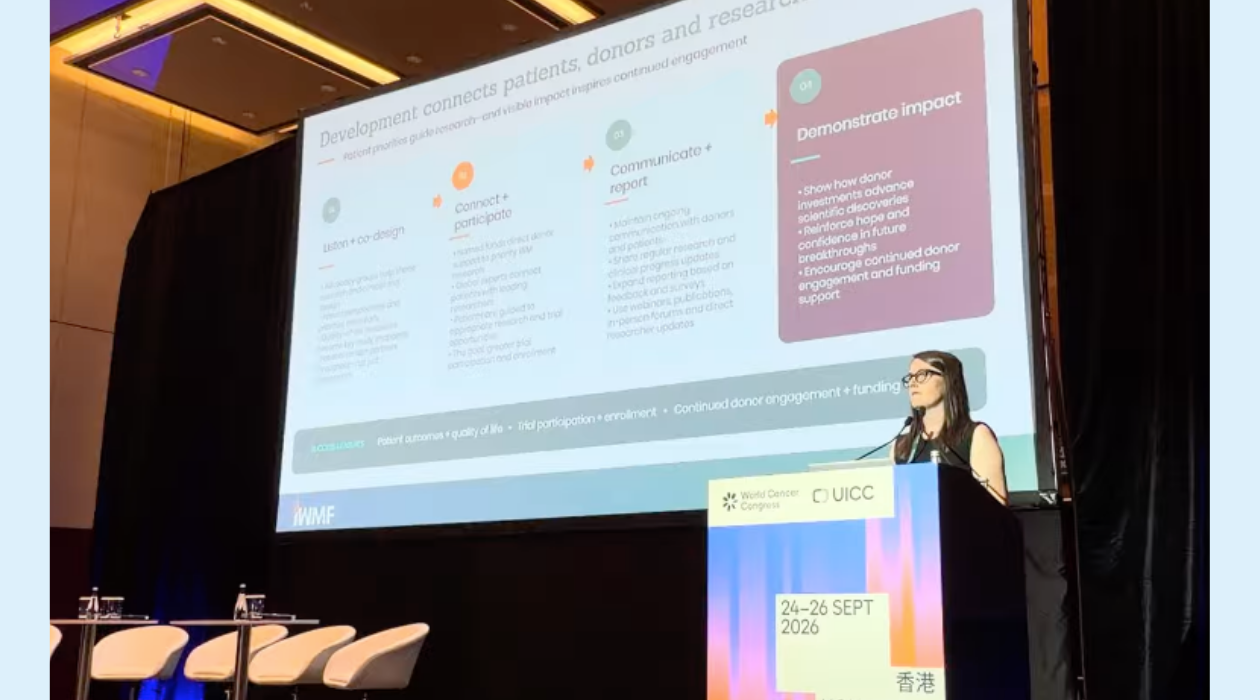
Beth Hill, IWMF’s Vice President of Strategic Initiatives presenting “Patient-Centered Progress: How IWMF Research Partnerships Are Shaping the Future of WM”
Connecting Patient Priorities with Research Progress
“Patient priorities become research progress” captures a central theme of Beth’s presentation: meaningful advances in WM depend on connecting patients’ experiences and priorities with the research, funding, and partnerships that move the field forward.
IWMF brings patients, donors, and researchers together through patient engagement, research funding, clinical trial awareness, and communication about scientific advances. Survey data Beth shared showed that the percentage of WM patients who would consider participating in a clinical trial increased from 64% in 2024 to approximately 75% in 2026.
From 2020 through 2026, IWMF awarded $4.38 million in research funding, supporting 37 applications across 22 institutions in nine countries. Its portfolio includes translational research, pilot clinical trials testing novel immunotherapies, studies conducted alongside pharmaceutical trials, and awards supporting the next generation of WM investigators.
IWMF-funded research has contributed to discoveries with important implications for WM treatment, including work related to the MYD88 mutation that helped pave the way for BTK inhibitor therapies. Research into CXCR4 has also advanced understanding of treatment response, relapse, and resistance.
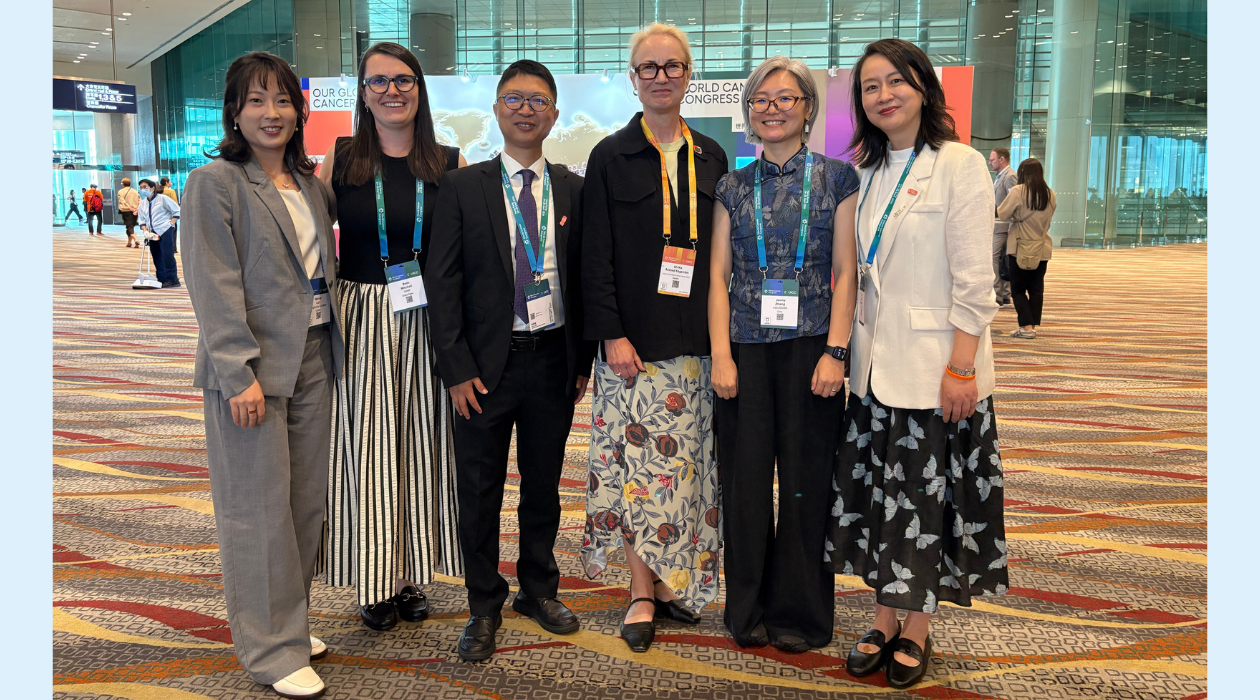
Fostering global partnerships at the 2026 World Cancer Congress in Hong Kong.
Building a Global Future for WM Research
IWMF’s research partnerships extend across institutions and borders. WM-NET connects research institutions in the United States to advance collaborative studies and clinical trials, while the European Consortium for Waldenström’s Macroglobulinemia (ECWM) supports research collaboration, education, and knowledge-sharing in Europe. Coordination between the networks helps strengthen research efforts across the Atlantic.
Looking ahead, IWMF is supporting emerging areas of investigation, including cellular therapies, novel immunotherapies, and ways to better understand relapse and treatment resistance.
Beth also emphasized that patient-centered research must look beyond treatment response to outcomes that matter in daily life, including fatigue, neuropathy, symptoms, treatment burden, quality of life, and the durability of treatment benefits. Involving patients in research and clinical trial design from the beginning, along with improving access to diagnosis, specialist care, and clinical trials, helps keep research focused on the needs of the WM community.
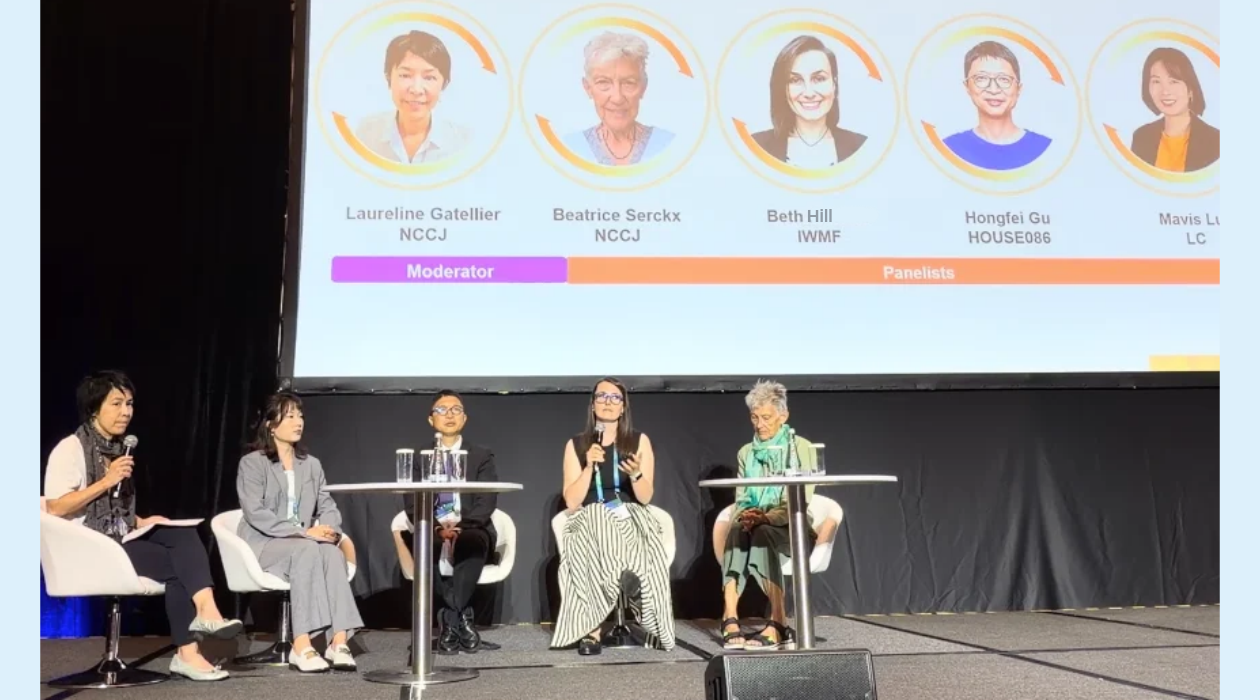
Panel Discussion with IWMF’s representative, Beth Hill
Looking Ahead
IWMF’s vision is a world without WM. Achieving that vision requires sustained investment in research, strong partnerships, and a community whose experiences help shape the direction of progress.
Through its research funding, international collaborations, patient education, and engagement with the WM community, IWMF works to connect what matters to patients with the research that can make a difference.
Beth’s participation at the World Cancer Congress was an opportunity to share this work with an international audience and strengthen connections across the global cancer community.
Patient priorities become research progress when patients, researchers, donors, and advocates work together toward a shared future.
Learn more about IWMF’s Research Strategy.
Consider donating to fuel WM progress.
For questions, reach out to office@iwmf.com.